System Design
🚀 What are SOLID Principles?
SOLID is a set of five design principles that help us write better, cleaner, and more maintainable code. They are:
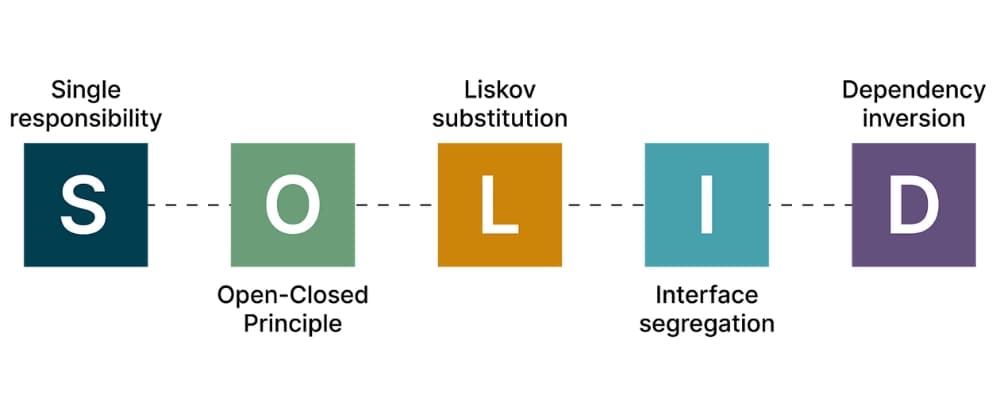
SOLID is a set of five design principles that help us write better, cleaner, and more maintainable code. They are:
- S — Single Responsibility Principle (SRP)
- O — Open/Closed Principle (OCP)
- L — Liskov Substitution Principle (LSP)
- I — Interface Segregation Principle (ISP)
- D — Dependency Inversion Principle (DIP)
Think of them as rules for good architecture — just like traffic rules help cars move smoothly, these principles help code work smoothly in big systems.
1️⃣ Single Responsibility Principle (SRP)
👉 A class or function should do only one thing (have only one reason to change).
❌ Bad Example (doing too many things):
class User {
  constructor(name, email) {
    this.name = name;
    this.email = email;
  }

  saveUser() {
    // Save user to database
  }

  sendEmail() {
    // Send welcome email
  }
}
Here, User is handling data, database, and email → Too many responsibilities.
✅ Good Example (split responsibilities):
class User {
  constructor(name, email) {
    this.name = name;
    this.email = email;
  }
}

class UserRepository {
  save(user) {
    // Save user to database
  }
}

class EmailService {
  sendEmail(email, message) {
    // Send email
  }
}
Now:
Useronly holds data.UserRepositoryhandles saving.EmailServicehandles email.
👉 Each has one reason to change → Clean!
2️⃣ Open/Closed Principle (OCP)
👉 Code should be open for extension but closed for modification. This means: You should add new features without touching old code.
❌ Bad Example:
function calculateDiscount(type, price) {
  if (type === "regular") {
    return price * 0.9;
  } else if (type === "premium") {
    return price * 0.8;
  }
}
Problem: If tomorrow we add "gold" customers, we need to modify this function → risk of breaking existing logic.
✅ Good Example:
class Discount {
  calculate(price) {
    return price;
  }
}

class RegularDiscount extends Discount {
  calculate(price) {
    return price * 0.9;
  }
}

class PremiumDiscount extends Discount {
  calculate(price) {
    return price * 0.8;
  }
}
Now, if we want "GoldDiscount", we just add a new class → no need to touch old code.
3️⃣ Liskov Substitution Principle (LSP)
👉 If A is a parent class, then its child B should work everywhere A works without breaking things.
❌ Bad Example:
class Bird {
  fly() {
    console.log("Flying...");
  }
}

class Penguin extends Bird {
  fly() {
    throw new Error("Penguins can’t fly!");
  }
}
Here, Penguin breaks the rule because it can’t behave like a Bird.
✅ Good Example:
class Bird {
  move() {
    console.log("Moving...");
  }
}

class Sparrow extends Bird {
  move() {
    console.log("Flying...");
  }
}

class Penguin extends Bird {
  move() {
    console.log("Swimming...");
  }
}
Now all birds can move (fly/swim) → no broken logic.
4️⃣ Interface Segregation Principle (ISP)
👉 Don’t force a class to implement things it doesn’t need.
❌ Bad Example:
class Machine {
  print() {}
  scan() {}
  fax() {}
}

class Printer extends Machine {
  scan() {
    throw new Error("I can’t scan!");
  }
  fax() {
    throw new Error("I can’t fax!");
  }
}
Here, Printer is forced to implement useless methods.
✅ Good Example:
class Printer {
  print() {}
}

class Scanner {
  scan() {}
}

class Fax {
  fax() {}
}
Now, a simple Printer only prints. A multifunctional device can combine all.
5️⃣ Dependency Inversion Principle (DIP)
👉 High-level modules (business logic) should not depend on low-level details. Both should depend on abstractions.
❌ Bad Example:
class MySQLDatabase {
  save(data) {
    console.log("Saving to MySQL");
  }
}

class UserRepository {
  constructor() {
    this.db = new MySQLDatabase(); // tightly coupled
  }

  saveUser(user) {
    this.db.save(user);
  }
}
Problem: If tomorrow we want MongoDB, we need to change UserRepository.
✅ Good Example:
class Database {
  save(data) {}
}

class MySQLDatabase extends Database {
  save(data) {
    console.log("Saving to MySQL");
  }
}

class MongoDBDatabase extends Database {
  save(data) {
    console.log("Saving to MongoDB");
  }
}

class UserRepository {
  constructor(database) {
    this.db = database; // depends on abstraction
  }

  saveUser(user) {
    this.db.save(user);
  }
}
Now, UserRepository can work with any database → just pass the one you need.
🎯 Summary in Simple Words
- S (Single Responsibility): One job per class/function.
- O (Open/Closed): Add new stuff without changing old stuff.
- L (Liskov): Subclasses should not break parent behavior.
- I (Interface Segregation): Don’t force things to implement what they don’t need.
- D (Dependency Inversion): Depend on abstractions, not concrete details.
👉 Following SOLID makes your code:
- Easier to understand
- Easier to test
- Easier to extend in future
Mini E-commerce Checkout System (with SOLID)
1. S — Single Responsibility Principle (SRP)
👉 Split responsibilities: User data, Cart, Payment, and Notification.
// ✅ User just holds data
class User {
  constructor(name, email) {
    this.name = name;
    this.email = email;
  }
}

// ✅ Cart handles products & total
class Cart {
  constructor() {
    this.items = [];
  }

  addItem(product, quantity) {
    this.items.push({ product, quantity });
  }

  getTotal() {
    return this.items.reduce(
      (sum, item) => sum + item.product.price * item.quantity,
      0
    );
  }
}

// ✅ Product is a simple data class
class Product {
  constructor(name, price) {
    this.name = name;
    this.price = price;
  }
}
2. O — Open/Closed Principle (OCP)
👉 Payment should be extendable without modifying existing code.
// Base Payment Strategy (abstract idea)
class PaymentStrategy {
  pay(amount) {}
}

// New payment methods can be added without touching old ones
class CreditCardPayment extends PaymentStrategy {
  pay(amount) {
    console.log(`Paid $${amount} with Credit Card`);
  }
}

class PayPalPayment extends PaymentStrategy {
  pay(amount) {
    console.log(`Paid $${amount} with PayPal`);
  }
}
3. L — Liskov Substitution Principle (LSP)
👉 Any PaymentStrategy should be usable without breaking checkout.
// Example: Adding UPI Payment (works exactly like others)
class UpiPayment extends PaymentStrategy {
  pay(amount) {
    console.log(`Paid $${amount} via UPI`);
  }
}
Here, all payment methods (CreditCardPayment, PayPalPayment, UpiPayment) behave consistently → checkout doesn’t care which one is used.
4. I — Interface Segregation Principle (ISP)
👉 Notifications: Don’t force checkout to use unwanted channels.
class EmailNotification {
  send(to, message) {
    console.log(`Email sent to ${to}: ${message}`);
  }
}

class SMSNotification {
  send(to, message) {
    console.log(`SMS sent to ${to}: ${message}`);
  }
}
Now, Checkout can pick the notification type it actually needs (not forced to use both).
5. D — Dependency Inversion Principle (DIP)
👉 Checkout depends on abstractions (Payment + Notification), not concrete classes.
class Checkout {
  constructor(paymentStrategy, notificationService) {
    this.paymentStrategy = paymentStrategy;      // abstraction
    this.notificationService = notificationService; // abstraction
  }

  processOrder(user, cart) {
    const amount = cart.getTotal();

    // ✅ Pay using selected strategy
    this.paymentStrategy.pay(amount);

    // ✅ Notify using selected service
    this.notificationService.send(
      user.email,
      `Your order of $${amount} has been placed successfully!`
    );
  }
}
🎯 Usage Example
// Create a user
const user = new User("Anukool", "anukool@example.com");

// Add products
const cart = new Cart();
cart.addItem(new Product("Laptop", 1000), 1);
cart.addItem(new Product("Mouse", 50), 2);

// Choose Payment & Notification strategy
const paymentMethod = new PayPalPayment();        // can swap with CreditCardPayment or UpiPayment
const notificationService = new EmailNotification(); // can swap with SMSNotification

// Checkout
const checkout = new Checkout(paymentMethod, notificationService);
checkout.processOrder(user, cart);
✅ How All 5 SOLID Principles Apply Here
- S (Single Responsibility): User, Cart, Payment, Notification each handle only one thing.
- O (Open/Closed): Add new payment methods (UPI, Crypto) without touching existing code.
- L (Liskov): All payment methods behave like
PaymentStrategy, so they’re interchangeable. - I (Interface Segregation): Checkout can choose Email or SMS notifications, not forced into one big interface.
- D (Dependency Inversion): Checkout depends on abstract strategies, not specific classes.
👉 This way, the system is flexible, testable, and extendable.